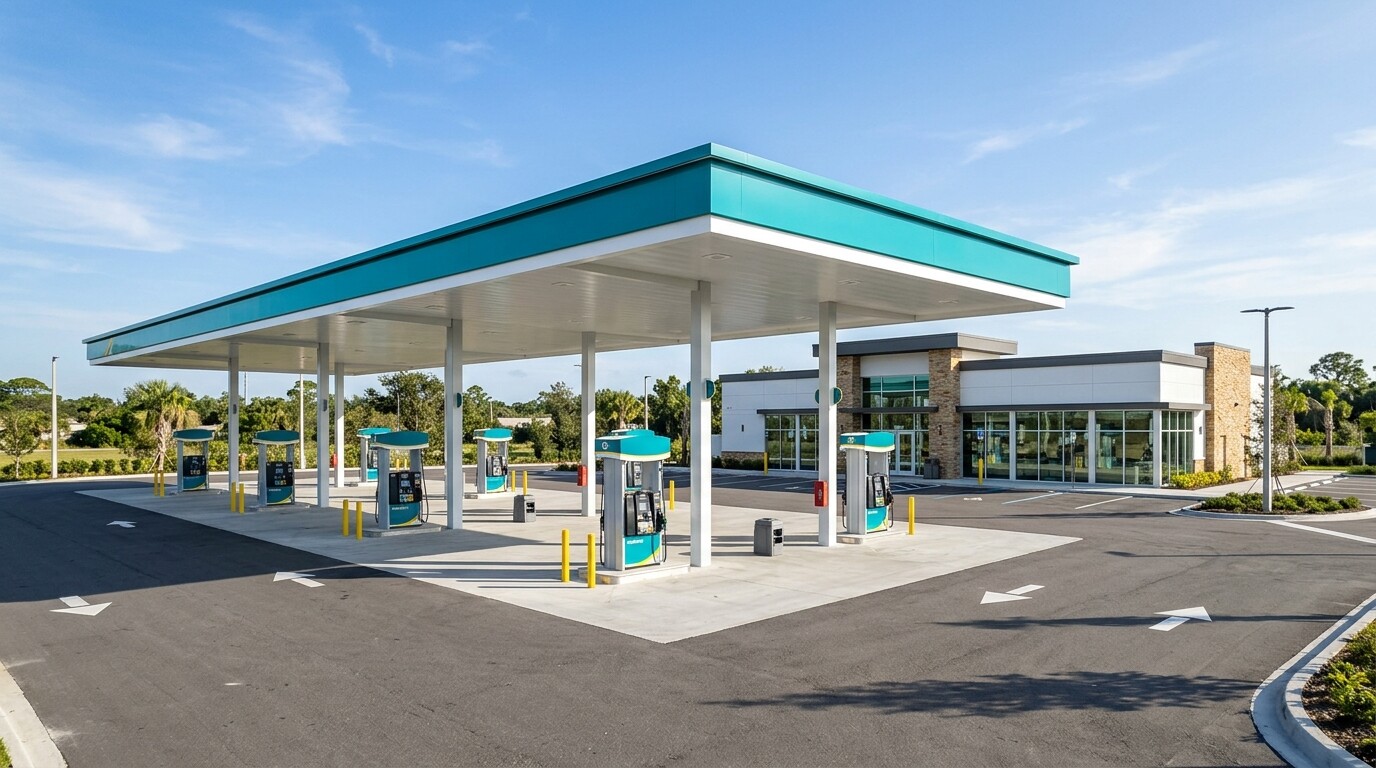
On any older gas station acquisition, the biggest threat to your equity is buried twelve feet under the concrete apron. A historical fuel release or an expired state tank registration can make a property unfinanceable overnight.
During the acquisition due diligence for an operating Valero commercial fueling facility along the Greater DFW South corridor, we put environmental and mechanical verification ahead of everything else. We directed the Phase I Environmental Site Assessment, pulled state TCEQ underground storage tank registration and release files, and inspected the double-wall tank interstitial sensors, spill buckets, and automatic tank gauge printouts in the field.
Phase I Environmental Site Assessment & Historical Review
Conducting a professional environmental audit protects an incoming owner from pre-existing regulatory contamination orders:
- Historical aerial photography, city: Directory records, and prior fire insurance maps audited to establish continuous commercial land use.
- State environmental regulatory agency databases: Reviewed for reported petroleum hydrocarbon releases or active remediation notices within the regulatory radius.
- Adjoining commercial properties and: Regional groundwater migration gradients analyzed to identify potential off-site contamination migration risks.
- Site reconnaissance inspection conducted: Across all dispenser aprons, monitoring well caps, and tank fill ports to verify visual absence of surface staining.
Subsurface Fuel System Integrity & Spill Prevention
Verifying petroleum storage hardware ensures operational compliance with environmental protection regulations:
- Underground storage tank interstitial monitoring consoles: Audited to confirm twenty-four-hour electronic continuous leak detection functionality.
- Shear valve impact mechanisms: And dispenser containment sumps inspected to ensure dry, corrosion-free containment environments.
- Stage II vapor recovery: Piping and pressure decay test certificates audited to confirm regulatory air quality compliance.
- Spill containment buckets and: Overfill protection flapper valves inspected for physical wear and tight-fill seal integrity.
Commercial Underwriting & Asset Repositioning Strategy
Balancing physical asset risk with commercial returns requires disciplined capital structuring:
- Environmental insurance coverage packages: Structured with pollution legal liability endorsements to insulate the ownership entity.
- Fuel supply distributor contracts: Reviewed to optimize rack margin splits, branded credit card processing fees, and delivery schedules.
- Retail convenience store product mix: Evaluated to introduce higher-margin specialty food and grab-and-go beverage offerings.
- Five-year capital improvement reserves: Structured to fund planned pavement resealing, canopy fascia renewal, and dispenser upgrades.
The Ground Truth
Never waive or rush environmental and tank compliance audits on a petroleum deal.
Verifying clean historical regulatory files, tight line-pressure tests, and active tank insurance coverage before your inspection period expires is the only way to protect your balance sheet in retail fuel real estate.