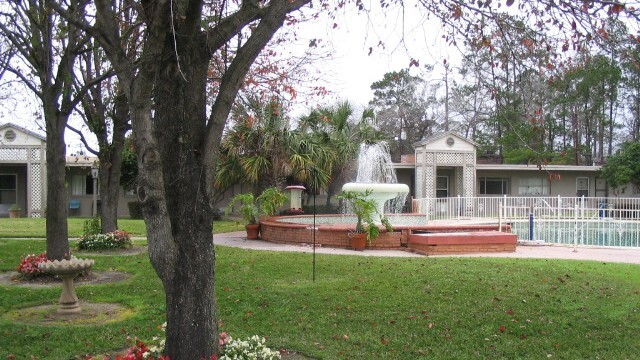
Evaluating a foreclosed senior living property requires looking past asking price per unit to understand why lender-operated financials bled cash. The Ridgewood Retirement Community sat on 4.4 acres along a major Interstate 10 corridor on the Texas Gulf Coast, built in 1955 as a two-story, 93-unit congregate housing campus combining interior corridors with ground-floor cabana apartments arranged around a central courtyard and swimming pool.
When the asset entered lender ownership following foreclosure in late 2006, trailing four-month financials annualized for 2007 showed 83% physical occupancy against a 17% vacancy allowance, yet delivered a -2.04% current capitalization rate. Operating expenses ran at roughly 104% of gross potential income. Breaking down the expense ledger showed why: building and grounds maintenance consumed roughly 32.4% of total operating expenses, full daily food service took about 24.5%, and administrative overhead absorbed another 13.6%, alongside heavy insurance and third-party management fees.
From a physical-plant and unit-mix standpoint, the offering spanned 83 private-pay studios ranging from roughly 250 to 750 square feet plus 10 two-bedroom apartments reaching up to 1,000 square feet across 10 distinct floor plans. Amenities included a central dining hall, exercise room, conference room, library lounge, beauty shop, and on-site third-party supportive-care offices, while unit move-in schedules paired monthly rent tiers with non-refundable application, community, pet, and motorized-scooter deposits plus required resident liability coverage.
Analyzing the 2007 year-end balance sheet and operating statements alongside the floor-plan survey clarified the real underwriting play. The problem was never resident demand along an established medical corridor, as 83% occupancy proved. Value recovery depended entirely on compressing bloated lender-era building maintenance, food cost, and administrative payroll ratios back to private-operator norms.