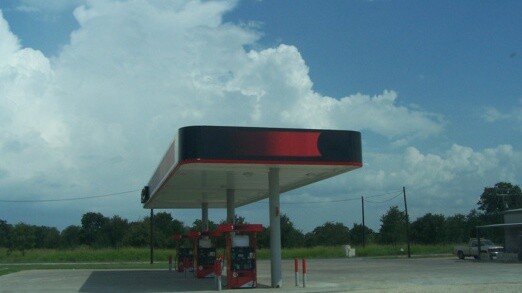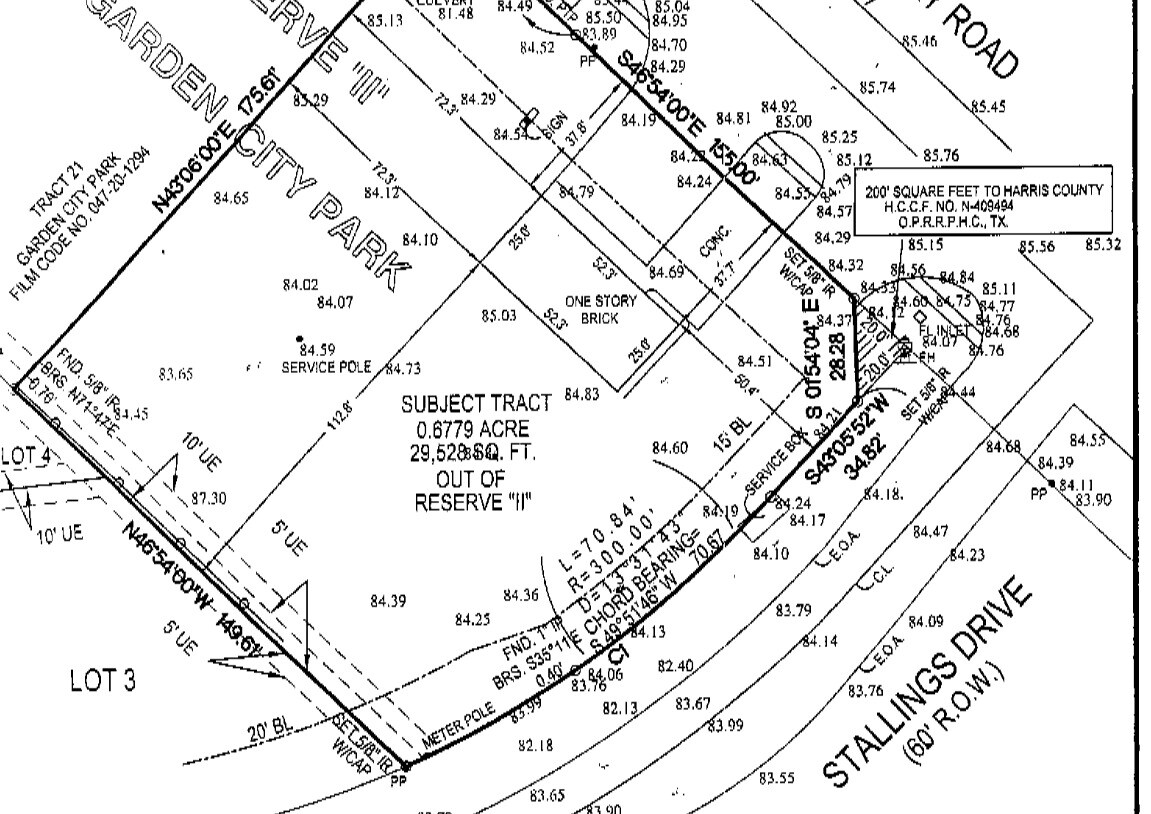
Engineering the civil site layout for a ground-up commercial petroleum travel plaza along a major Texas highway transit corridor comes down to geometry and weight. You have to fit sixty-five-foot fuel tankers and commercial semi-trucks safely through the curb cuts, around the underground storage tank drop pads, and under the diesel canopy without clipping a single bollard or blocking four-wheel commuter cars pulling up to the convenience store.
We directed the civil site layout, forecourt turning geometry, and infrastructure feasibility for this Texas highway travel plaza. We engineered the highway ingress and egress curb cuts, positioned the deep double-wall fiberglass underground storage tank vault with clean tanker unloading lanes, designed the heavy reinforced concrete forecourt pavement section, and sized the on-site stormwater detention basin and oil-water separator system.
Technical Scope & Commercial Petroleum Civil Site Engineering
Engineering a high-volume commercial petroleum travel center requires rigorous technical coordination across five core civil engineering disciplines:
- Civil Site Layout and Multi-Vehicle Circulation Geometry: Designing overall property boundary geometry, ingress and egress curb cut locations, and vehicular circulation pathways. Civil designs utilized computerized swept-path turning radius simulations to confirm that thirty-foot commercial delivery trucks and emergency fire apparatus could maneuver through forecourts without encroaching upon customer parking or fuel dispenser islands.
- Underground Fuel Storage Tank Environmental Vault Engineering: Specifying location, excavation dimensions, and environmental setback boundaries for multi-compartment double-walled fiberglass underground petroleum storage tanks. Engineering details incorporated reinforced concrete hold-down anchor pads, deadman ballast systems designed to resist hydrostatic ground-water uplift buoyancy, and containment sump monitoring ports complying with environmental regulations.
- Heavy-Duty Forecourt Concrete Pavement Sizing: Engineering heavy-duty pavement cross-sections capable of supporting continuous commercial traffic. Specifications called for eight-inch-thick four-thousand-pound-per-square-inch compressive strength reinforced concrete paving across fueling aprons, underlaid by six inches of crushed limestone base over stabilized subgrade soils to eliminate pavement rutting.
- Civil Stormwater Runoff Conveyance and Detention Engineering: Designing on-site stormwater retention facilities, reinforced concrete storm sewer piping, and perimeter swale ditches. Engineering calculations modeled peak twenty-five-year rainfall runoff across expansive concrete surfaces, sizing on-site detention basins with restricted-release orifice plates to prevent overloading municipal storm drainage canals.
- High-Clearance Multi-Dispenser Fuel Canopy Structural Foundations: Calculating structural deep foundation requirements for an expansive multi-pump structural steel fueling canopy. Structural drawings specified heavy reinforced concrete drilled shafts extending twenty feet below grade, anchored with high-tensile steel anchor bolt clusters designed to withstand regional coastal wind loads.
Field Execution, Code Realities & Underwriting Control
On the ground, protecting the project budget and schedule comes down to enforcing strict field standards across these critical details:
- Civil Factors Determine Underground Fuel: In regions with high groundwater tables, underground fuel storage tanks act like hollow metal submarines when empty or partially filled, creating massive upward hydrostatic buoyancy forces. Civil engineers must calculate the total buoyant uplift displacement force and design reinforced concrete deadman anchor slabs or continuous concrete hold-down pads. Heavy hold-down straps anchored to concrete ballast slabs ensure tanks remain securely buried and will not pop out of the ground during major flooding events.
- Reinforced Concrete Forecourt Aprons Mandatory: Asphalt paving cannot be utilized directly adjacent to petroleum dispensers because gasoline and diesel fuels act as natural petroleum solvents. Accidental fuel drips and tanker overfill spills rapidly dissolve asphaltic binders, causing aggregate unraveling, deep soft depressions, and eventual pavement collapse. Thick reinforced concrete forecourt aprons are completely impervious to petroleum dissolution and withstand intense dynamic point loadings from heavy vehicles.
- Commercial Driveway Throat Depth Affect: Commercial driveway throat depth represents the unobstructed distance between the street curb cut and the first internal parking bay or drive aisle. Insufficient throat depth causes turning vehicles to back up directly into active highway travel lanes while waiting for internal parking maneuvers. Designing generous throat depths allows arriving traffic to decelerate safely off municipal thoroughfares, preventing rear-end collisions and preserving smooth site ingress.
- Environmental Containment Safeguards Protect Stormwater: Commercial fueling stations must prevent spilled hydrocarbons from entering municipal storm sewer systems. Fueling islands are constructed with raised concrete aprons that drain toward specialized oil-water gravity separator tanks rather than municipal storm basins. Furthermore, positive-limiting perimeter containment curbs prevent rainwater from washing across fuel dispensers and discharging directly into public environmental waterways.
The Ground Truth
If a civil engineer lays out a travel center using passenger-car turning templates instead of real WB-67 tractor-trailer swept-path geometry, trucks will run over your concrete curbs, crush your landscaping islands, and back up onto the highway feeder road during peak fueling hours.
Engineering the underground tank setbacks, wide tanker drop lanes, heavy concrete paving, and stormwater detention as one integrated civil package gave the developer a clean path through TxDOT and municipal permitting.